According to AS, Mourinho has no conflict with the club's management regarding the failed Rodri transfer since his return to Real Madrid.
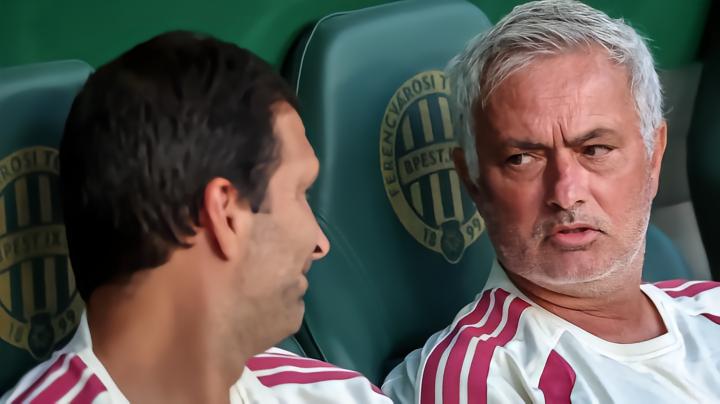
According to AS, since that crucial meeting at the San Mauro Hotel in Madrid at the end of April, Mourinho has maintained open and frank communication with the club's top management, led by sporting director José Ángel Sánchez and his deputy, Juni Calafate. At that time, Florentino Pérez believed that recalling the Portuguese coach was the best option for leading the team's plans.
Mourinho managed Real Madrid according to his own agreed-upon conditions, wielding significant influence over player selection and team needs, but he did not make any unrealistic demands on the management. Instead, he clearly articulated his tactical approach from the outset, and the entire process was built on an atmosphere of mutual respect and complete trust.
The three-way talks discussed a number of transfer issues, including Dumfries, Bernardo Silva and his versatility, as well as the possibility of strengthening the center-back and midfield positions. They also mentioned the need to increase the speed of the attacking third. There were no tense moments throughout the entire process.
During these discussions, the name of Spanish midfielder Rodri was mentioned, especially after his outstanding performance at the World Cup, when everyone realized he could be a significant addition to Real Madrid's squad. However, the player ultimately opted for Barcelona's offer, failing to finalize a deal with either Real Madrid or his current club, Manchester City, and initially engaging in no real, in-depth negotiations.
The board accepted the result, as did Mourinho, who did not trigger the crisis that some outside voices had portrayed. The Portuguese coach knew that with three weeks left in the summer transfer window, Valdebebas was fully committed to building a team capable of competing for all titles.
Mourinho himself suggested at the meeting at the San Mauro Hotel that, in order to convince the management to sign Bernardo Silva, they needed to acknowledge the Portuguese player's ability to serve as the midfield playmaker. Two months later, this judgment was proven correct, as Bernardo Silva had become a key pillar of the team.
The failed Rodri transfer doesn't mean Real Madrid has completely closed the door to signing a new midfielder. The transfer window remains open until the 31st of this month, and the discussion continues. However, Mourinho and the management don't believe there are any top-tier players currently on the market worth a large investment.
The coaching staff and sports management are still calmly assessing and searching for targets, and are confident in the players currently available. At the same time, they are waiting for further clarification on Camavinga's situation, whose form is currently being questioned.
Mourinho also brought his coaching style to the daily management of the training ground, implementing strict rules and absolute control, reflecting his management philosophy. In this atmosphere, the manager was very happy to be back at his "real home."
The Portuguese coach maintains a very clear communication style with all players, a practice endorsed by the entire team, including those not in the plans after the transfer window closed. He consistently insists on direct communication, free of anger or tension, but is also aware that more complex moments will arise as the pressure of real matches increases.