I don't know if this is fair, but from what I see, the most important thing this Argentinian did in his life was to let his love for his child be seen.
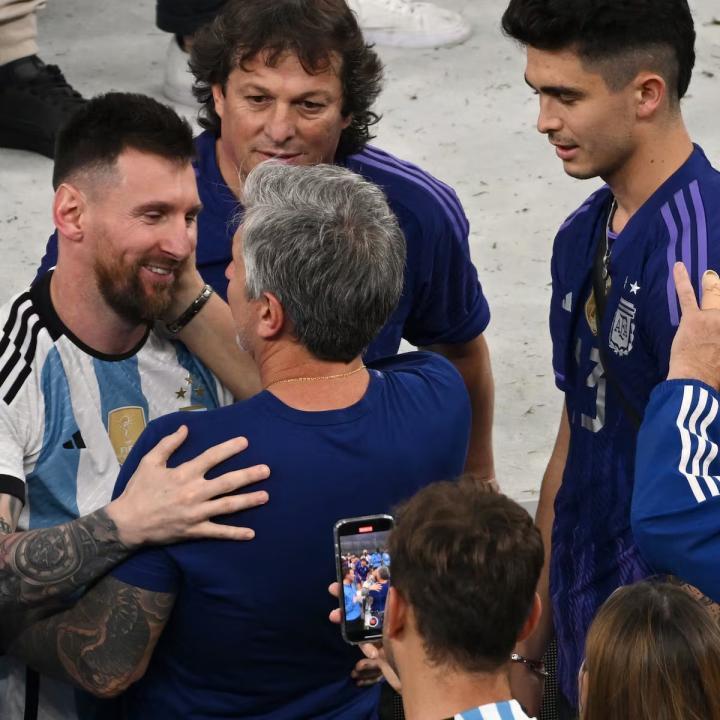
I've never met him, nor have I ever crossed paths with him. Even though we've unknowingly arrived at thousands of stadiums together to watch the same game, I've never missed him. Yet, after hearing thousands of heartfelt stories, I still deeply admire his greatness.
It's as if the person who wrote countless articles wasn't Messi's father—this familiar yet distant figure—but rather my best friend's father. I don't know if this is fair, but from what I've seen, the most important thing this Argentinian did in his life was to let his protective love for his son be seen. He won't be remembered by history as a son, brother, or husband with 68 years of life, nor as a worker, neighbor, or agent; he will be remembered as a father.
This is particularly moving given everything I've experienced and witnessed in the world of football. Just how important must his legacy be for Real Madrid and Barcelona, these fierce rivals, to dedicate this weekend's schedule to paying tribute to his fatherhood? As a player, I've seen many fathers in the stands berating their coaches—coaches who are simply trying to nurture their children every day; berating opponents simply because they are enemies; berating referees simply because they are trying their best to organize the game; and berating anything that deviates from their plans and expectations. I've witnessed many of those arguments, and now I prefer to erase them from my memory. I've even seen parents storm into the locker room and smash a newly awarded medal against the coach's chest. Apparently, the problem stemmed from the allocation of playing time.
Later, as a young journalist, I witnessed firsthand how some parents bribed the coaching staff to ensure their star players were always in the starting lineup, hoping to pull them out of their "spiritual poverty." Later still, as a journalist, I'll never forget the late Portillo's father yelling at Van der Leyen Luxemburgo during a training session at Las Rozas Football City, accusing Raúl of blocking his son's development. I also can't forget how, after the turn of the century, whenever the golden generation of the Spanish national team announced an important starting lineup, and news of the Del Bosque and Aragonés era teams surfaced, chat groups across half the world would be filled with people seeking revenge. Their children weren't in the official photos, so they felt they had to publicize this as an injustice.
Today, as a psycho-sports performance consultant in any open youth training camp, I have enough stories to write another book: some fathers take their children to McDonald's to celebrate when they win, and take away the reward as punishment when they lose; some so-called mentors never ask their children whether they had fun or why after the game, they only care about the result and whether there were any goals.
They don't realize that such demands often put excessive pressure on children before competitions and can even lead to anxiety afterward. Often, the burden isn't the lost points themselves, but the constant need for explanations. And there are always parents who can find reasons to attend parent-teacher meetings and training workshops, claiming they're there to help, not to cause trouble. Yet, they often take time off work, putting aside their jobs to focus on the most important moment of the week: not missing a single detail, offering suggestions, recording videos, and even devising tactics for local kindergarten matches like Nottingham Plains vs. Aston Villa.
Of course, there are also fathers who behave very well. Unfortunately, such people are too few. If they do exist, they don't want to be too high-profile—just as you wouldn't throw sunflower seed shells on the ground or pronounce imperative sentences correctly—and therefore find it difficult to inspire others. Being a father is a heavy responsibility, which is why I am not a father. Some people try too hard, while others don't do enough. That's why we should praise those who strike a balance like Jorge. Always maintaining the right distance is a gift in itself. Being respected in every corner because of it is something that should inspire everyone.
He accompanied Leo to Barcelona when he was a child, through both calm and difficult times, sharing everything. When faced with the choice of whether to continue the challenge of "becoming the world's best player" or cross the Atlantic again to return to his family, he would considerately ask for his opinion. During the glorious years when Guardiola and Luis Enrique led the team to Champions League victories and Messi won eight Ballon d'Or awards, he always offered his support. Five years ago, when Messi left Camp Nou, he also walked out with his head held high.
He was always in Paris or Miami, a steadfast pillar bearing the responsibility for the entire nation. No wonder Messi was willing to dedicate the 2022 Qatar World Cup to him. And no wonder Messi wept like a child after missing another opportunity to pay tribute to him. This summer, sensing the impending doom, he still fought relentlessly to the very end, tears welling in his eyes. Messi's most important role was always to make his father proud. And it will always be so. May he rest in peace. Thank you for everything he did. More important than having a player like Messi is having a father like you by our side.