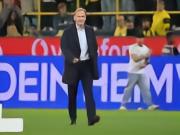
The recently concluded World Cup saw outstanding commercial performance, with Adidas, Levi's, and Beckham emerging as brand winners.
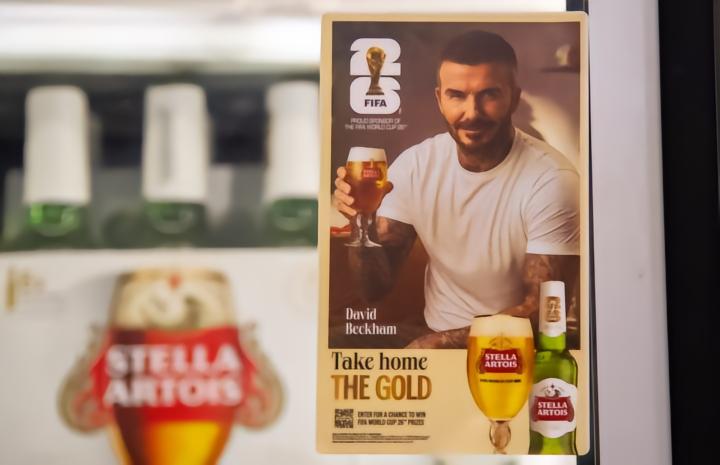
Whether it's David Beckham's frequent appearances in almost every television commercial, the final becoming an Adidas civil war, or Levi's brilliant marketing strategy, this World Cup is rife with commercial activity. For FIFA, this is the most profitable tournament in its history, with projected revenue of $15 billion for the 2023-26 cycle.
The controversial water break (effectively splitting the half into four quarters) provided time for television commercials, in addition to fan interaction, star-studded broadcast ads, and influencer content viewed by millions of netizens. Perhaps the most memorable aspects of this World Cup were the off-field controversies, such as Balogun's match suspension being postponed after US President Trump called FIFA President Gianni Infantino, but its commercial success is undeniable.
Brands can spend millions of dollars partnering with FIFA to participate in the World Cup in an effort to boost exposure, but these investments sometimes fizzle out, especially when a company fails to stand out from the crowd of competitors. The industry consensus is that Adidas "won" the World Cup from a brand perspective, thanks to its "You Got This" slogan, its star-studded "Backyard Legends" advertising campaign, and the immense popularity of the jerseys it produced for participating teams. Of course, the fact that both finalists, Spain and Argentina, wore Adidas jerseys also played a significant role.
But this German sportswear brand wasn't the only company to leave a commercial mark during the tournament. Beckham, prediction market firm Kalshi, Gillette, and Levi's all generated buzz during the World Cup. Kansas City's promotional activities were also not overlooked.
“The top news is Adidas vs. Nike, and Adidas won,” said Gareth Balch, CEO and co-founder of global sports and entertainment marketing company Two Circles, when discussing which brands stood out at the World Cup. “I don’t think it’s just because Messi and Yamal were in the final. Their football promotion campaign was phenomenal. In several host cities, the match ball became a central symbol of the city’s energy. The ball was key to Adidas’s victory, and they followed up with some brilliant creative ideas and the amazing slogan ‘You Got This.’”
Adidas stated that jersey sales for this World Cup are four times that of the 2022 Qatar World Cup, and match ball sales are twice as high. The company expects event-related sales to exceed $1.7 billion, and its "Backyard Legends" campaign has been nominated for an Emmy Award for Outstanding Commercial.
It wasn't just Bourci who believed Adidas performed exceptionally well at the World Cup; Misbacher Ulaize, CEO and co-founder of Nectar Social, an AI-driven commerce platform for consumer brands, also pointed to its extensive reach. After analyzing "more than 2.7 million pieces of World Cup content across social media platforms, generating over 64 billion impressions," Nectar found that Adidas's penetration surpassed that of any other brand.
“Adidas did something interesting: they took a hybrid approach and realized that creators, especially those on social media, are both a great distribution engine and a visual hook,” said Luke Tilitzky, marketing strategist at Nectar Social and author of the report. “On social media, people are looking for native content or native creators they expect to see in their feed, so Adidas realized they could combine creators with the celebrities and athletes they already endorse, using creators as a hook.”
Beyond Adidas, many believe that David Beckham (who is also an Adidas athlete and appeared in its World Cup promotional video) has elevated his personal brand to new heights through a massive advertising campaign. The 51-year-old former England captain has partnered with over 11 companies, including long-time collaborators Adidas and Pepsi, Bank of America, Lay's (Walkers in the UK), Home Depot, McDonald's, Ninja Kitchen, and Stella Artois.
“This is his peak moment,” Bauer said of Beckham’s endorsements and exposure. “You can understand why brand executives were sitting in the meeting room 12 months ago saying, ‘Okay, how do we get involved in the World Cup?’ The contact opportunities, instant awareness, and appeal that David Beckham brings wherever he is is enormous. It’s fantastic. People joke about how often he’s there, but I think he’s doing a really good job. He’s setting a new model that many people will follow.”
Bower also mentioned Kansas City—one of the 16 host cities across Canada, Mexico, and the United States for this World Cup—as one of the biggest winners in tourism promotion. According to Bank of America data, Kansas City saw the largest increase in consumer spending among the US host cities during the group stage and the final 32 rounds, with over 400,000 people attending its fan festival.
“Kansas City is the smallest host city by any conventional population metric,” Bourcher said, “but it ranks among the top in all relevant social media engagement metrics. They’ve also successfully positioned themselves as America’s sports capital, which is exactly the image they’ve been aiming for. Austin and Nashville, for example, are known for their distinct cultural characteristics, and Kansas City is doing the same thing. It has truly elevated its status in this way. The city has a passionate fanbase and really showcases it, and all the brands involved benefit twice as much.”
For Ulaize, one metric for measuring a brand's success is its ability to "drive dialogue," whether it's an official FIFA partner, a World Cup licensee, or simply trying to participate in the world's biggest sporting event. One of the brands that does this best is probably Levi's.
Although Levi's has held the naming rights to the San Francisco 49ers NFL team's home stadium in Santa Clara, California for over a decade, FIFA required it and all World Cup venues to cover any existing branding to "protect the exclusive rights of their brands and their sponsors." Therefore, during this World Cup, the stadium is referred to as "San Francisco Stadium" (despite being located nearly 50 miles south of the city), not Levi's Stadium. The clothing brand responded humorously to the requirement to cover its stadium logos with white tarpaulins, later modifying its profile picture on social media to match the actual covering and uploading a related video, which garnered over 2.5 million likes.
“The reason Levi’s won, and generated so much viral buzz and discussion, is because they created a moment that gave people something to talk about,” Ulaizie said. “That’s the most important thing. How do you create virality? How do you drive the algorithm?” From a ROI perspective, Ulaizie pointed to prediction market firm Kalshi, which may have been the real winner, waiting until after the event started before agreeing to co-sponsor ADI Predictstreet. “They were smart; they waited and saw before deciding whether to invest in high-ROI marketing,” Ulaizie added. “In the second half of the event, they significantly increased their promotional efforts, demonstrating a well-executed strategy. They didn’t spend a lot of money sponsoring Beckham or doing official sponsorship before the event started, yet they still achieved a very high level of amplification.”
Ulaize pointed out that social media platforms have "unlimited reach potential," and according to information shared by FIFA (which partners with social media platforms), World Cup-related content garnered 1.2 trillion views globally. During the tournament, the official @fifaworldcup account also received 28 billion views and 1.7 billion likes, gaining 57 million new followers since the beginning of the year.
With the Women's World Cup in Brazil next June and July, and the 2028 Los Angeles Olympics and Paralympics approaching, businesses are already considering how to drive conversations at these events. This World Cup demonstrates that brands don't need to spend millions of dollars to become official partners to gain attention. This could become an interesting trend as other major sporting events follow.