According to Spanish media reports, Vigo hopes to become one of the host cities for the 2030 World Cup. The prospects for the Balaídos Stadium will depend on FIFA's inspection in September, with the Spanish Football Federation currently offering only 50% odds.
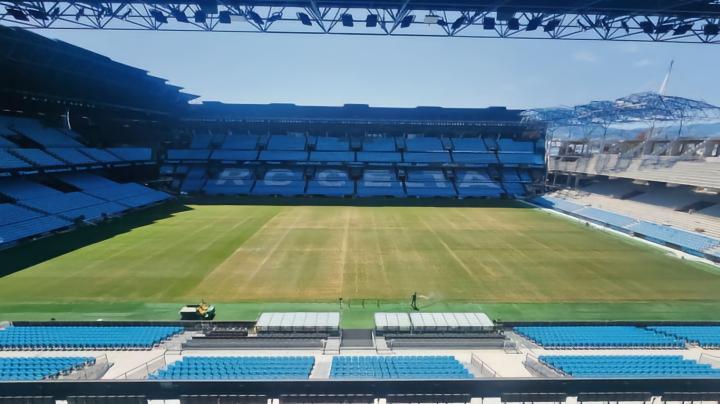
The football atmosphere in Vigo is particularly vibrant this year. Celta Vigo will participate in European competitions for the second consecutive season, while Fortuna will be playing in the Segunda División for the first time in their history. The Balaídos Stadium will host at least 44 matches this season, with more expected if Celta Vigo progresses further in the Europa League and Copa del Rey. Renovation work on the stands is also underway; once the Göre Stand is completed, the first phase of the major overhaul of the Balaídos Stadium will be finished. It is expected that nearly 30,000 fans will be able to return to the stands by the end of January. The Balaídos Stadium is a city-owned stadium; although the city government and the club have signed a contract for at least 50 years of overall operation, ownership remains with the local government.
Vigo hopes Balaados Stadium will be one of the venues for the 2030 World Cup, but this won't be easy. To understand the city government's expectations for the stadium, we need to go back a few years. At that time, they submitted a bid to the Spanish Football Federation, hoping Balaados would be one of the 11 stadiums in Spain to host the World Cup. Spain, Portugal, and Morocco will co-host the tournament. After a controversial and opaque selection process, Balaados was ultimately rejected because the Spanish Football Federation adjusted some of its scoring criteria, and was overtaken by San Sebastián's stadium. Vigo Mayor Abel Caballero stated that he would take the matter to court if the scoring criteria for each stadium could not be explained in detail. In recent months, the mayor has maintained the same stance and announced that he will continue to renovate the main stand, striving to increase the stadium's capacity to over 40,000.
Since the Spanish Football Federation (FFF) released its ratings and selected 11 stadiums to host the 2030 World Cup, the situation has changed significantly. Malaga and Deportivo La Coruña, initially shortlisted, have withdrawn because the renovations required by FIFA were beyond their financial capacity in terms of cost and scale. At this point, Vigo re-emerged as a potential candidate. For the FFF, Vigo is the second choice after Valencia. Valencia also failed to be selected in the first round, but its more mature infrastructure gives it a clear advantage. However, Las Rozas still has many doubts about the future of the Vigo project. Recently, relations between Spain and FIFA have cooled, while Morocco's cooperation with the organization that manages global football has clearly warmed. Some journalists specializing in football coverage even believe that Morocco hopes to "steal" the final match, which the FFF initially considered the likely venue for the Santiago Bernabéu. As the most important match of the tournament, the final is still undecided, and the final number of host cities remains undecided, leaving the FFF with lingering concerns.
The Spanish Football Federation had invited Vigo to "work together" to secure the hosting rights for the 2030 World Cup. The simplest scenario would have been for Malaga and Deportivo La Coruña to be eliminated, with Valencia and Vigo taking their place, both cities having previously expressed interest in hosting the tournament. However, Las Rozas suspects that FIFA will ultimately reduce the number of host cities, making Balaidos's chances even slimmer. As mentioned earlier, Balaidos is currently ranked behind Mestalla Stadium.
A FIFA delegation will visit stadiums starting in September to inspect facilities and assess their prospects. The final list of stadiums to host the next World Cup is expected to become clearer by then. Sources within the Spanish Football Federation indicate that Vigo and Balaídos currently have only a "50% chance." The Vigo city government has stated that the main stand renovation project will continue even if the World Cup doesn't materialize. Before gaining a clearer understanding of the World Cup prospects, Balaídos Stadium still has several Celta Vigo matches to host, and this Thursday they received some bad news.
La Liga has officially confirmed that the match against Osasuna, originally scheduled for next Sunday, has been postponed due to poor turf condition and a recent fungal infestation. The match will now be played on August 27th at 8:30 PM. The club has begun a complete turf replacement and hopes to have the pitch usable again by August 24th. At that time, Celta Vigo's first team match against Fortuna will almost seamlessly follow. The turf will only get a brief respite during the international break at the end of September, ending nearly a month of intensive use.