The Ballon d'Or has officially announced that Rodri's potential transfer to Barcelona is becoming one of the biggest transfers in modern football. According to sources, a comprehensive agreement has been reached for the Spanish midfielder to join Barcelona, and Rodri will officially transfer to the Catalan giants.
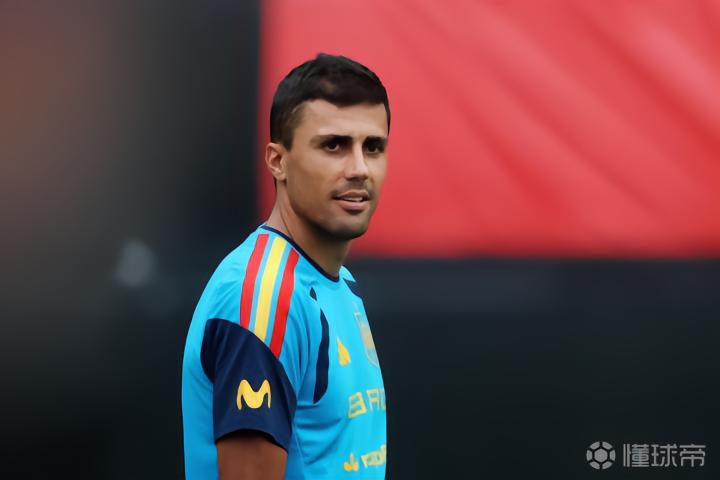
This transfer means that a Ballon d'Or winner and the player who just won the 2026 World Cup is about to join a top club like Barcelona. The 30-year-old midfielder has decided to step out of his comfort zone after many years at Manchester City, start a new chapter in his career, and join Hansi Flick's plans for Barcelona.
Rodri received lucrative offers from several European clubs, but he chose Barcelona with almost no hesitation. Many people can't help but ask: Why?
The reason is actually quite clear, and Rodri himself has admitted it: he is highly compatible with Barcelona's team model and football philosophy.
A football philosophy tailored to him
This decision stemmed from Rodri's football aesthetic, which he had developed gradually since childhood, and his appreciation for the way Barcelona played.
In an interview with Universo Valdano, Rodri discussed how Barcelona's style of football influenced his understanding of the midfield position.
He said, "I have never seen such beautiful, elegant and simple football. I watch Barcelona games, I watch Busquets, Xavi... Sometimes you stop and think, and then tell yourself: This is the kind of player I want to be."
Busquets' successor
There is no doubt that Rodri's mention of Sergio Busquets is key to understanding why he chose to join Barcelona this summer.
In Barcelona's football system, Busquets has long played the role of the lone defensive midfielder, while Rodri's development at Manchester City and the Spanish national team has led to constant comparisons between the two. From playing style to understanding the rhythm of the game, Rodri has a natural fit with Barcelona's traditional midfield philosophy.
Aside from their similar physical attributes, both players possess exceptional defensive shielding abilities, capable of reading the game from the first pass and orchestrating and controlling the team's attacking rhythm under pressure. For Rodri, donning the Barcelona jersey means he finally has the perfect stage to fully showcase his footballing style.
The new midfield trio
More than a decade ago, the midfield trio of Busquets, Xavi, and Iniesta redefined European football with their near-perfect control of the ball and the pace of the game.
Now, under Hansi Flick's leadership, Barcelona hopes to recreate a similar chemistry by forming a new midfield trio of Rodri, Pedri, and Dani Olmo.
Undoubtedly, this new midfield trio, in terms of both football philosophy and player characteristics, shares many similarities with Busquets, Xavi, and Iniesta from Barcelona's golden era. From this perspective, the combination of Rodri, Pedri, and Olmo almost encompasses all the key abilities required for a modern football midfield.
"We have never seen Barcelona play such beautiful, elegant, and simple football before." — Rodri
Rodri is responsible for providing tactical discipline, physical duels, and control of the game's tempo in the backfield; Pedri connects the midfield with his excellent spatial awareness and smooth passing; and Olmo creates depth between the two lines with his outstanding off-the-ball movement.
This combination has proven its power in the Spanish national team – they helped Spain win the World Cup, just like Xavi, Iniesta and Busquets in 2010.
In addition, Flick has a number of excellent young midfielders at his disposal, including Gavi, Fermín and Mark Casado, which gives Barcelona a wider range of midfield options.
A cycle closes again.
Rodri chose Barcelona because the club's tactical philosophy naturally aligned with his understanding of football. Now, this midfielder, who has already reached the pinnacle of football in terms of both individual honors and team achievements, has chosen to return to La Liga, joining the team that once inspired his professional development.
With Rodri's arrival, Flick's Barcelona now possesses a more complete midfield system and is poised to enter a new era of success. The question remains: can Rodri recreate the glory of Barcelona's golden age?