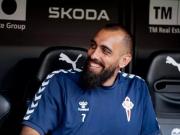
Ferran Torres became a national hero this summer before transferring to Paris Saint-Germain, sparking mixed reactions from Barcelona fans.
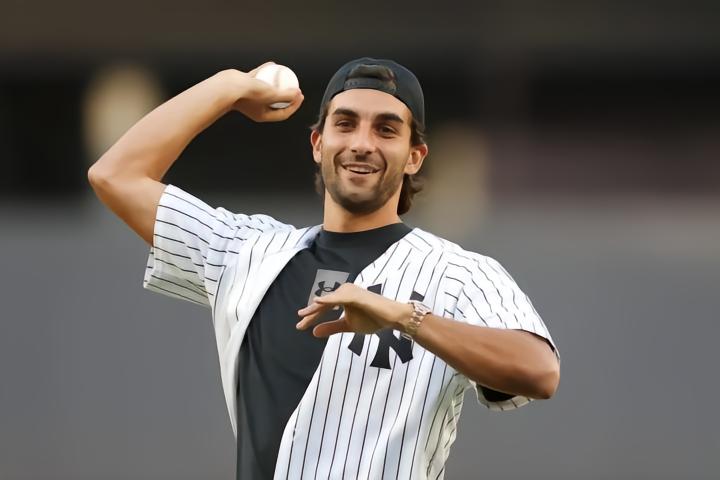
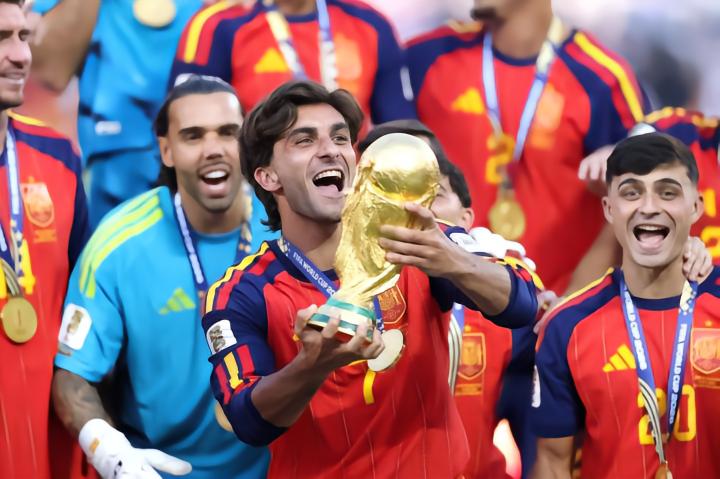
On July 19, he came on as a substitute in the World Cup final and scored the winning goal in the 106th minute, becoming a Spanish football hero.
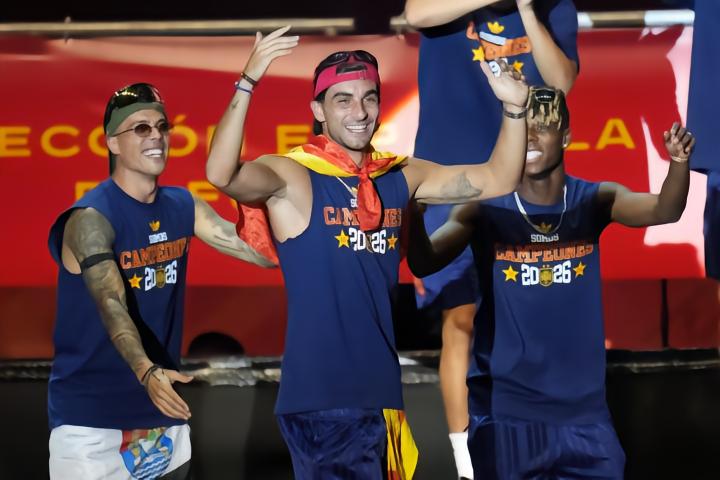
Spanish fans cheered for him, and Barcelona fans also celebrated with him. During the team's championship parade back in Madrid, an inflatable shark could be seen in the crowd, a reference to his nickname "Shark," which he created at Barcelona to relieve pressure.
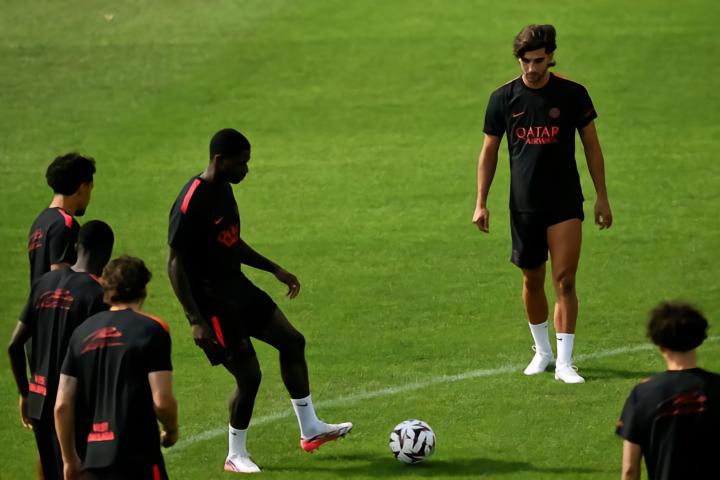
A month later, Torres scored the winning goal in Spain's 1-0 victory over Argentina, but some Barcelona supporters were happy that he had transferred to Paris Saint-Germain for 50 million euros.
This is clearly not the ending that outsiders would have expected for a World Cup hero.
When 26-year-old Torres left Barcelona, he was not a player hated by everyone, nor had he fallen out with the club or anyone within it.
However, some of his actions over the past month have angered or displeased many fans. It is widely believed that his winning goal for Spain ignited the subsequent controversy.
Let's start with that hat.
As the Spanish team celebrated their World Cup victory in Madrid, Torres wore a red baseball cap that read "Make Spain Great Again." Even those without a deep understanding of politics can see the connection to US President Donald Trump's "Make America Great Again" slogan.
The White House responded to the photo via its official social media account, posting a video of Torres wearing the hat with the caption: "Everyone wants to join the movement."
Torres later insisted that it had nothing to do with politics, but was simply to celebrate Spain's return to the top of world football.
Next was the bracelet.
During the celebrations, Torres was also seen wearing a rubber wristband with the Spanish flag and the insignia of the Spanish Civil Guard. The Civil Guard is one of Spain's two major national law enforcement agencies, the other being the National Police.
It's unfair to interpret this as a political statement, but some people still see political implications in Catalonia's recent history.
In 2017, at the height of the now-defunct independence movement in the region, local authorities organized an independence referendum, which the Spanish government rejected and declared illegal. The referendum drew large crowds to the streets of Barcelona and was met with a strong police crackdown.
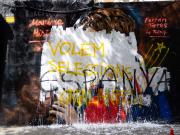
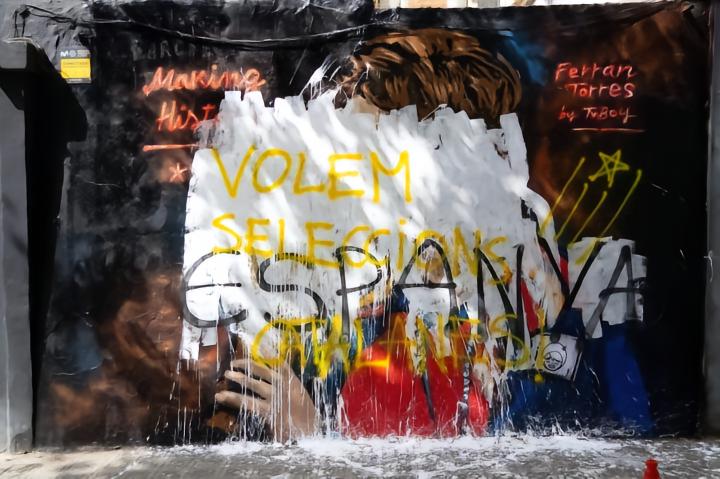
Perhaps Torres simply wanted to express his Spanish identity. But in Catalonia, even seemingly harmless actions can take on political connotations. In Barcelona, a mural of Torres created by Italian street artist TVBoy was vandalized, with the words "We want the Catalan national team" written on it, while another graffiti simply read "Spain." Both phrases were written in Catalan.
A few weeks later, Torres responded to the matter in an interview with Valencia radio.
“I am Valencian, a Valencian, and a Spaniard,” he said. “If anyone doesn’t like it, that’s their problem.”
Torres made these remarks on August 7th. By then, several interviews he had given in the United States had already caused an even bigger uproar.
After the World Cup final, Torres and seven other Barcelona players from the Spanish national team took a break before returning to preseason training. Torres went to the United States and surprised Barcelona with a series of media interviews on August 3.
When NBC asked him where he would play this season, he said, "I have a contract with Barcelona, but in the world of football you never know what will happen." His Barcelona contract expires in June 2027. "I'm just waiting to make the right decision, but I don't know yet."
In a later interview with Sportico, he also discussed Paris Saint-Germain's interest.
“It’s a good thing every time these teams want you,” Torres said. “Anything can happen in football, but the good thing is that since I have a contract, I can wait and decide for myself.”
"What can Barcelona do to keep me? They have to show they want me, negotiate, and ultimately it all comes down to communication."
Torres isn't the kind of player who truly shines at Barcelona. To be fair, since joining from Manchester City for €55 million in January 2022, he hasn't generally lived up to expectations.
He also faced psychological challenges and consulted a psychologist in an effort to perform at his best. This is where his nickname resurfaced. The "Shark" moniker comes from Ultimate Fighting Championship fighter Ilya Topria. Torres heard an interview with the Georgian-Spanish athlete, in which Topria, when discussing his opponents, said, "There's only one shark here; the rest are sardines."
Torres found it amusing and even told his Barcelona teammates about it during dinner. At the beginning of the 2023-24 season, his goal-scoring form improved, and the team started calling him "The Shark." His celebrations reflected his belief that he was proving the doubters wrong.
But Torres has never been able to consistently deliver high-level performances, and that feeling of "I'm fighting against the whole world" has not disappeared.
At the start of the 2025-26 season, Flick envisioned the season completing the transition from Lewandowski to Torres, with the latter becoming Barcelona's starting number 9. However, reality proved otherwise. Torres struggled, managing only 21 goals and 3 assists in 49 appearances, including a 14-game goalless streak from late January to mid-April. After the season ended, there was no progress on his contract renewal, further complicated by the terms of his transfer from Manchester City four years prior.
If Barcelona renew Torres' contract, they will have to pay Manchester City approximately €8 million; moreover, club sources, speaking anonymously, revealed that, as they are not authorized to speak publicly, another clause stipulates that if he is sold for more than €55 million, Barcelona will have to pay Manchester City an additional €10 million.
Ultimately, the Spanish club viewed him as a top substitute rather than a regular starter. Meanwhile, Barcelona spent the entire summer trying to sign Atletico Madrid's Julián Álvarez.
Barcelona's pursuit of Alvarez reinforced a perception surrounding Torres. Torres felt he had been mistreated for some time and wanted to respond. Every goal became an answer to his critics, every outstanding performance a rebuttal.
Of course, criticism and pressure certainly exist. Barcelona is not a gentle place for any player, and Torres has endured a lot of criticism. No one can deny that he has always carried this pressure. But sometimes, it seems he is fighting against an amplified, sensationalized, and perpetuated version of criticism that doesn't entirely reflect reality. Many Barça fans saw a kind of betrayal in those American media interviews because they felt the club's fans had stood by him in crucial moments.
Did Torres receive more criticism than he deserved? Did he receive more support than he remembered? The truth is probably somewhere in between. Then, he scored the winning goal in the World Cup final.
People naturally draw parallels between this goal and Iniesta's winning goal in extra time in the 2010 final, a match in which Spain also defeated the Netherlands 1-0. Torres's next step could be to go out there and, as the country's new hero, say: "I told you so."
But ultimately, perhaps nothing is more "Spanish" than emulating Don Quixote—fighting against things that look like giants, when they may not be nearly as big as they appear.