Baptista believes that Brazilian coaches' coaching philosophies are outdated.
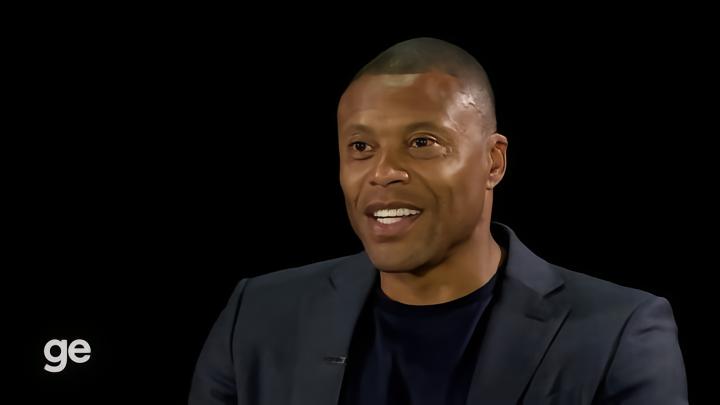
Julio Baptista describes himself as a "situational" coach, adapting his style to different environments and needs. However, a brief conversation with the São Paulo U20 head coach reveals that he actually employs a strict, iron-fisted approach. He forbids players from swearing, restricts cell phone use, and even completely avoids communication with players' parents.
In an interview with Abre Aspas, the former midfielder/forward elaborated on his coaching philosophy and preferences, discussed his career plans, and analyzed the current state of Brazilian football and the industry environment he is in.
He stated, "I believe that Brazilian coaches have gradually lost their room for development precisely because they failed to update their philosophies in a timely manner."
Despite speaking cautiously to avoid controversy, Baptista pointed out that a lack of communication and understanding has affected Neymar's career, and he also criticized Brazil's performance when they were eliminated by Norway in the last World Cup.
He said, "We can never give up possession of the ball, we can never give up putting pressure on the opponent, and we can never give up trying to score at all times."
Q: What has it been like since you started coaching?
A: This job is always challenging. When you first start, you imagine a lot, full of anticipation, and you prepare thoroughly. I think playing experience is very helpful; it helps you develop a clear mind, understand the behind-the-scenes workings, and know what the locker room is like—after all, I've worked with high-level players and excellent coaches. However, I think preparation is equally important. I prepared very thoroughly, completing the UEFA Pro League coaching course in Spain, which I believe is one of the best coaching development programs.
Q: Theoretical knowledge and player experience can be helpful, but some things can only be learned through practice, is that right?
A: That's right, there's no other way. Daily work shapes you and helps you. I still remember the first time I stood in front of the kids. Thank God I had five years at Valladolid under Ronaldo. It was an extremely valuable learning experience for me, helping me grow, making me better at organizing, and becoming a better coach. Within your own coaching system and philosophy, you constantly adjust and improve details, gradually approaching the person you truly want to be, forming your own way of interacting with players and leading your team. The responsibilities of a coach are no longer singular; today's coaches need multifaceted abilities, handling more tasks, covering a wider range of areas, and learning to delegate. I believe that knowing how to recognize talent and being good at delegating are crucial for leaders.
Q: What is your leadership style? How do you get along with players?
A: I think modern coaches need to be "situational," adapting to different situations. Sometimes you have to be assertive, sometimes you have to be like a father. Sometimes you have to be a playmaker, and your style needs to constantly change. I think this is very important in today's world, especially when working with young players. I think Brazilian young players are quite different from Spanish young players and European young players; European players are generally better in terms of upbringing.
I'm naturally a disciplined person, which is very helpful. I have high expectations and am very strict with the kids. But over time, they realize it's all for their own good, that what I say ultimately comes true, they continuously improve, and they understand that what I say makes sense. I think the most important thing is building connection. I am the same person I am in life, and the same person I am in the team. The only difference is that when interacting with the kids, some aspects need to be stricter, but I believe this connection is essential; it makes daily work much smoother and is very helpful.
Q: You mentioned that Brazilian players are different from Spanish players. Could you explain in more detail? Is it due to behavioral differences?
A: It involves both behavior and manners. I think the manners issue can be addressed quickly; I made adjustments in São Paulo as well. When I first joined the team, I did encounter many problems, especially regarding cell phone use and behavior. Afterwards, I gradually established rules and discipline, making the players understand that rules exist, must be followed, and there will be consequences for not following them. This is crucial because players will constantly test your limits. When you truly draw a line, the players understand: "This is where it ends; crossing it will cause trouble, and you won't get to play." And the most tangible punishment is always being banned from playing. I think this is very important for gaining their approval. I also always emphasize that they must respect us, respect each other, and respect themselves.
One of the habits I broke, which I also found completely useless, was swearing during training. Players constantly insulting their teammates doesn't help the team or provide guidance. I guide players; if criticism is needed, I offer it as a teammate, while simultaneously guiding them on how to do better. That's true guidance and education. Therefore, I believe there are many more effective and reasonable methods than those from 15 or 20 years ago. Those old methods no longer work because we're dealing with a new generation of players; 20-year-olds think completely differently. We must connect with them. If we don't, a significant gap will form, preventing us from unlocking everyone's full potential.
Could you elaborate on the issue of banning cell phones?
He said, "I had to impose a ban. I'm a very easy-going person, but when I saw that some methods weren't working, I told the players directly: 'Some things we can discuss and decide together, because I think you should have a say; but some things I will decide unilaterally, because I think it's good for the whole team.' So I stipulated that during the team's outings, no cell phones are allowed to be used during breakfast, lunch, dinner, pre-match pep talks, or when going to the training ground."
He continued, "The players understood. At first, they were indeed not used to it. Some would forget and bring their phones into the stadium, hiding them in their shorts. There's a locker at the training base where everyone is supposed to put their things, but some still brought their phones in. Then one day I announced that if I saw anyone with a phone again, they wouldn't have to participate in training. Only then did they realize I was serious. Anyone who was late, even the day before a game, would be immediately excluded from the roster; if they were on the bench, they wouldn't be allowed to take it to the away game. When you show these consequences to the players, they feel it and think, 'Oh my god, I can't make a mistake.' This gradually cultivates the players' self-discipline, which I think is very important, and this self-discipline will also help the team and shape the team."
Is this ban issued because you've found that cell phones are distracting?
He said, "Yes. During warm-ups, some players should be immediately focused and in the zone, but sometimes it takes them eight to ten minutes to understand the requirements. In any case, if they're looking at their phones twenty minutes before training, they naturally won't be able to maintain the necessary focus on the field. I told them, 'If you really want to pursue a professional football career, put your phones away. Look at them again after dinner, back in your rooms. We spend four or five hours together every day; this time should be reserved for the team, for what you need to learn—that's what truly brings about change. Those who listen will have a smoother path, while those who don't will suffer more.'"
We're talking about youth training right now, but professional players are also discussing cell phone use. There's also online criticism, pressure from social media... What are your thoughts on this?
He said, "I think smart players use their phones wisely. My former coach, Joaquin Caparrós, used to say that when things are going too well, 'you get too much sugar.' What does that mean? Players love to be praised, but nobody likes criticism. The key is to find a balance. When you're in good form, don't focus on the praise, and when you're in bad form, don't focus on the criticism. What players should really focus on is whether they've met the coach's requirements; that's the most important thing. If you can do that and filter out all the off-court distractions, things will often go more smoothly. We are exposed to far more information now than we were 15 or 20 years ago. The longer you stare at the screen, the longer you are exposed to this information; the less you see, the less distraction you receive."
Let's discuss another impact of technology. Thanks to social media, many young players are already known to fans before even making their professional debut. How does this exposure hinder a player's development?
He stated, "I think the impact is significant. It creates an atmosphere and reality completely different from the developmental environment players truly need. Players might mistakenly believe they've reached another stage, that they've become stars, when in reality they're far from it. This will affect their learning. A player still developing, if they think they're already a star, will have their thinking disrupted until some coaching decisions hit them hard enough to bring them back to reality. Family factors are crucial; you need to help your child stay grounded, remain humble, encourage them to work hard, and let them focus more on training and development, rather than on being in the spotlight. The spotlight means distraction and will pull people away from their goals. The closer players are to focused training, the easier their path will be."
For those working in youth training, identifying and correcting these mindsets should be a significant challenge.
He said, "I think it's something you can sense. Those of us who have been players have an intuition about a player's condition. You can feel whether they're in good or bad form. Once a player gets distracted, their performance will decline. At that point, you have to talk to them and say, 'Look, your performance has dropped recently, which is why I haven't let you play. Either change your attitude, or continue to sit on the bench. Is this the result you want?' So why not change it? It's through these methods of guidance and education that players gradually change. They'll start to think, 'Oh, I've worked hard in training, and what I've trained will help me play well in matches. If I'm prepared in training, I'll be better prepared in matches.' I've always firmly believed in the power of training."
I think you take something from every coach you work with as a player. Is there anyone who has inspired you the most? – I think it's a combination of factors, because every coach is important at some point, right? For example, in Brazil, I worked with Oswaldo de Oliveira, who was excellent, and also the late Wadão and Levi Courpi. One coach who was very important to my career was Pita, because when I lost some positions at São Paulo and was even close to being released, he was the first person to change my position. He adjusted my position, and from then on, I started to rise, started to improve, and became a starter again. Then there was Joaquín Caparrós, whom I worked with in Spain when I first arrived at Sevilla. He was also a very important coach for me because he was another person to change my position again, using me as a midfielder, identifying the needs of his team, and the qualities I could offer. I think this is very important; when a coach can see something the team needs in a player and get that player to contribute more, he becomes even more important than when he's playing another position.
"Throughout my career, I've worked with Arsène Wenger, Manuel Pellegrini, and other coaches, each with their own distinct characteristics, and Dunga of the Brazilian national team… They all shape you, guide you, until the end of your career, and of course, that's how it is. My thinking is: I don't want to become a coach like this person or that person; I want to have my own style. But of course, you take something with you, like some of the things Dunga did that I feel resonate with, or some of the things Arsène did that I also agree with. All of that is helpful."
How would your team play in an ideal situation? What characteristics would you like your team to have?
Because I come from the Spanish football system, which emphasizes possession and preventing the opponent from playing their own game, I prefer to play from positions away from my own penalty area and control the game. I believe that teams that can control the game allow their players to have a better understanding of the game. Everyone has their preferred style of play; some coaches like transitions, but I prefer control because I believe that advancing the game while controlling it opens up more possibilities. A more cohesive team can showcase multiple facets and control the game better. It can play transitions and also control the game at certain times, which greatly helps a team strive for championships and go further, while also reducing physical and mental strain.
This is a crucial point because we often don't think about this when we're players, but when you switch roles and become a coach, it makes a difference; the psychological aspect is extremely important. For example, in some matches in the Brazilian Serie A, our team didn't have as much control, and the game became more of a transitional affair. The team still showed competitiveness, but we didn't have as much control over the game, resulting in greater mental and physical exhaustion. In other matches where the team controlled the game, the physical and mental exhaustion was less. Over the entire season, this is much better because your players experience significantly less strain.
Are there any other unique aspects or areas that require attention in youth training that go beyond what happens on the field?
After returning to Brazil, I felt a very strong demand for results. When we talk about results, we forget the most important thing: organization and planning. This is completely different from the situation in Europe, where youth training is primarily about preparing players for professional teams. Furthermore, the U20 calendar of nearly 70 matches seems harmful to me because I believe training is essential. Training is about learning how to play, but with such a high frequency of matches, the most important aspect—teaching and learning—is lost. I think we should re-evaluate the number of matches, because the most important thing is to ensure players are well-prepared when they enter professional teams, not to overplay them. Injuries also frequently occur, forcing most teams to field 30 or more players. I don't see much point in this, even when considering other leagues.
Elano recently mentioned two challenges in youth development: political interference within clubs and relationships with players' parents. Parents can either help or hinder a player's growth. What are your thoughts on these two issues?
My view is very clear, and the clear standard is training. How players perform in training is visible. Players who don't perform well in training shouldn't be on the field. It's that simple.
But for a coach, is dealing with parents difficult, or is it easy for you? — I have absolutely no contact with parents. I go, do my job, come in, leave; my only interaction is with the players. I might greet the parents, but I never talk to any of them about football because they haven't received proper training and don't have the professional foundation to discuss football. The parents are there to encourage their children, nothing more. I think if they understand their role, they're doing a great job helping their children. If they start thinking, "You shouldn't do this, you should do that, you have to do that," then they're actually hurting their children.
Have you ever encountered a situation that made you uncomfortable?
No, because the parents are all on the other side of our training center, so I can barely hear anything. My voice is easily heard; I have a loud voice. However, our training method is such that the players almost don't need extra reminders. He knows what he needs to improve and what he should do in a match. We have a full week of preparation. We also have our own playing style and tactics. So whatever the parents say won't have any impact.
I feel you are a very tough coach. Are you like that in your daily life as well?
No, I only do that when necessary. When players feel they're getting too close to the coach, the coach isn't actually as close as they imagine. That's the right distance. This approach works for both U20 teams and professional players, even if it's just to maintain respect and understanding of the rules.
How did the negotiations for returning to São Paulo proceed?
Everything was very genuine; I never imagined I'd be back. Sometimes you realize your own needs, and I was genuinely unhappy in Spain. Then the possibility of returning to São Paulo arose, and initially, I wasn't even going to coach the youth teams I'm currently coaching, but rather the U17s, but I accepted. I don't care if it's the U20s or U17s; I only care about coming back to help São Paulo. Perhaps with my previous experience, I can help the team gradually rebuild its past traditions, rediscover what was lost along the way, and reconnect the core pillars that once made São Paulo a source of pride for its fans. Perhaps it's about re-establishing connections, making the players feel a greater sense of belonging, and gaining the fans' greater identification with the players. I think this is very important; I came here with this mission. It might be difficult, but I will strive to foster this unity.
Did the crisis the club was facing at the time make you hesitate when you received the offer?
No. The moment I received the invitation, I knew it was time to come back. Does the turmoil we've witnessed, especially the political upheaval at the club's top management, affect your daily work? — Absolutely not. Even with a new president who doesn't want to use me anymore, I know I've done an excellent job. I'm confident I'll deliver good results and make the players I take over even better than when I first coached them.
Won't the players be affected by these issues?
No, I think we'll detach ourselves and try not to be affected by these things; at least that's what I'm doing. You mentioned finding São Paulo's core pillars again. From your departure to your return, what has been left behind? What's missing now? —It's what I just mentioned. Perhaps we need to be stricter with the players, especially those from the youth academy, making them understand which club they're playing for. São Paulo is a team with a deep history; we need to help them rebuild their connection with the club, bridge the gap with the fans, and rediscover that old relationship. Even the fans have it tough; there's so much information now, and sometimes fans think the players are just mercenaries, only here for the money. But the players may also love the place they play for and have an emotional attachment to this experience; what we need to do is amplify that love.
Why did many players from your generation not continue in the football industry after retiring?
As my friend said, to become a coach, you need a bit of madness and a genuine passion for the job. But I really enjoy being with the players, standing on the pitch, immersed in the football atmosphere, competing, and offering help. We always talk about the players' identities, but behind each player are ordinary people. I think if we can go a step further and help the "people" grow first, we can naturally help the "players." A coach's responsibility is not just to lead the team, but also to educate the players, guide them through their growth, and bring about a complete transformation in their cognition and understanding, which will greatly benefit their lives. As for why other players don't want to stay, I think that's a very personal choice. We've played football for over twenty years, and some players don't want to be so involved anymore, or even watch or talk about football; they prefer a more stable life. So I think there aren't many coaches in Brazil with professional playing experience. As far as I can remember, only Belletti, Sylvinho, and Mancini have UEFA coaching licenses in Europe; I can't think of anyone else. There are certainly many coaches in Brazil pursuing further education, which is a good thing. The new generation of coaches, with new ideas and methods, can better promote the development of Brazilian football.
In terms of hardware configuration, what did you see in São Paulo? Was there a difference compared to when you were in Spain?
No, Brazilian football has always been advanced. In the fields of sports physiology and physical therapy, we've always excelled in player maintenance. I see that São Paulo has a very comprehensive system; players have psychological counseling and nutritionists. Sometimes I laugh, even with such advanced information technology, they still break discipline; after all, young people are prone to that. For example, when they go out with friends, if their friends want junk food, they eat it too. But that's part of youth. I was young once, we've all been young, and we need to understand that this is a necessary part of growing up. The closer a player gets to the professional arena, the stronger their awareness becomes; they'll understand that the less disciplined they are, the worse their performance will be. When a player's self-discipline improves, their performance will naturally improve. Some players mature quickly, which is important; some players grow slowly, and some really need to stumble and fall to grow up.
What were you like at that stage? Did you ever sneak out?
No, because I'm from São Paulo. I lived in Villasonia, commuting to training by bicycle and sometimes by bus, so I was quite close to São Paulo. But I was incredibly focused. I ate well, trained hard, put in extra effort, and knew my weaknesses. Because I was aware of these weaknesses, I was more willing to stay on the field and train than players with greater talent than myself. This made me more resilient and better prepared. When I finally got my chance, I was ready. I can say that the education I received at my grandfather's house was a huge help. It was a more rigorous education, which helped me achieve my dream.
Spain had a very strong midfield when they won the title. Meanwhile, Brazil has many forwards, but almost no midfielders when needed. Do you think this is a problem with Brazil's youth development system? Can this be corrected in the short term?
I don't see it that way. I think we have the most important thing: raw materials. We have many talented players, and I'm sure Brazil has many excellent coaches. We play against many teams in the Brazilian league, now the São Paulo State U20 league, and there are definitely some good coaches who can do an excellent job. Sometimes you even feel that the U20 matches are played better than the professional matches, with more detail.
My perspective is somewhat different because I've played for big clubs like Real Madrid. My idea is that I can lose, but I want to lose the way I want to lose. I have my own working methods and way of thinking, and my team plays that way. I think this is important because when things aren't going well, everyone tends to do things they wouldn't normally do. This is harmful because it creates a lot of confusion in the players' minds. Playing 4-3-3 today, then switching to 4-4-2 tomorrow if we're behind, then 5-3-2, 5-4-1—that confuses the players. I strongly believe in a clear path that we don't easily deviate from. We play like this, we defend like this, and if we lose, we acknowledge our opponents because they are better than us. I think this is very important and will help us grow in Brazilian football.
For a long time, we were stuck in the mindset that "we are the best national team, having won five championships," and stopped trying to understand football in a certain way. Europe began to build a system in a different way and introduced training methodologies into football. This was a huge change because when science and methodology enter football, it completely changes the way training is done. If you don't train with a method that has a clear progression path, it's difficult for players to improve.
But returning to the specific issue of the lack of midfielders and full-backs, do you think it's related to youth training?
Sometimes it's even related to the market and the club's team-building methods, because wingers are more valuable than full-backs... I think it's also related to the style of play. If you watch U17 and U15 matches, you'll see a lot of transitions, meaning there's very little control of the game and a lack of understanding of football. If a team lacks control, it means they lack sufficient understanding. I believe a team that can control the game can control the height of their formation, know how to draw the opponent in, know when the opponent will press, and know where the space behind the opponent is to be exploited. All these interpretive abilities are built through training and work. If there's only one way to play, which is to defend first and then quickly transition, then you're actually depriving the players of their intelligence. If I want to transition quickly, perhaps I don't need a number 10; it's better to have two wingers who can provide speed.
Does this also explain why it's so difficult to find a more creative center, while Spain has more of those players?
No, because I had players like that in São Paulo. When I joined the team, I identified some players who were very talented in positioning and body orientation before receiving the ball. Then we would gradually develop these abilities and help players improve their understanding. Systematic repetitive training helps players perform these movements without thinking. After doing enough, I don't need to correct them in matches, but in training. After practicing many times, I don't need to correct them in matches anymore, because the player will know how to get into position to control the ball, and he will know how to get into position if the ball comes from the right or left. He needs to open his hips to face the ball so that it goes into his left foot, not his right. All of this makes the game easier for the player, but the player didn't know these things before, so we had to teach them.